
Loving again after being widowed.
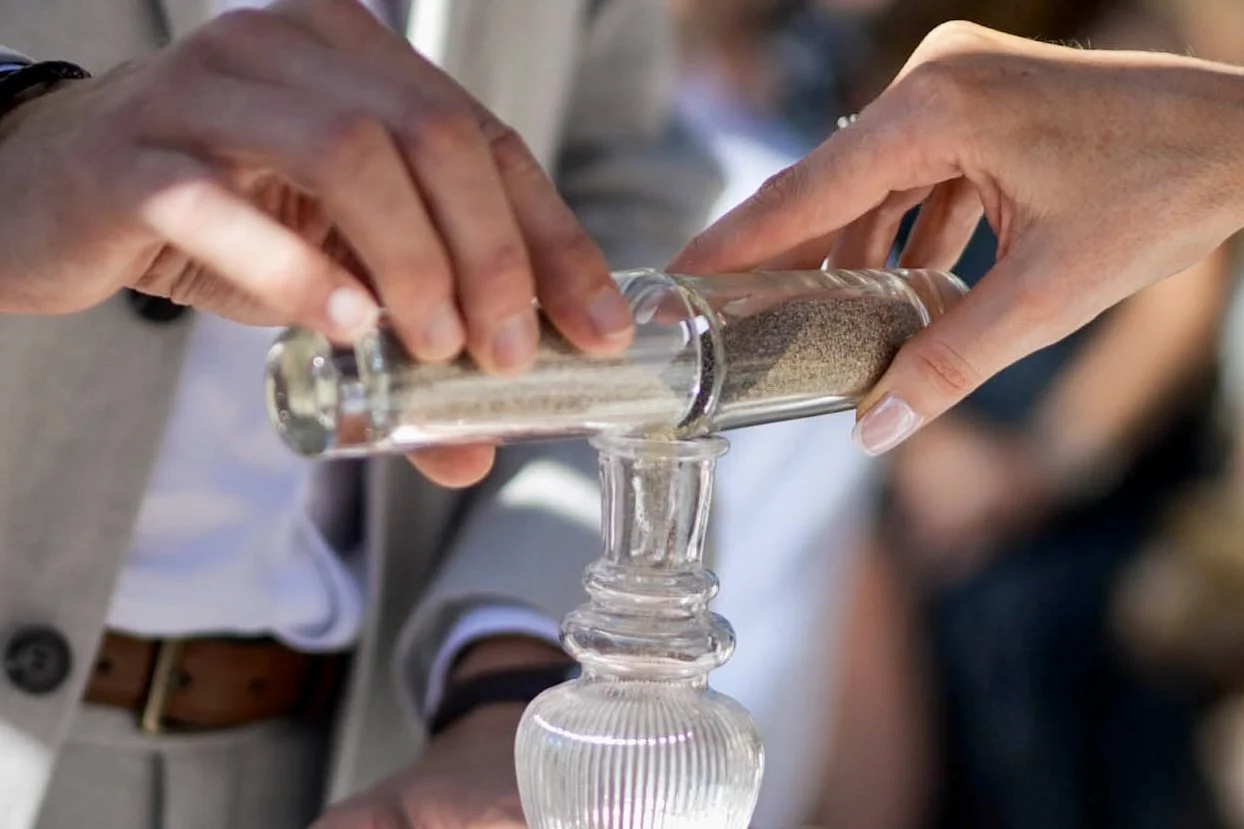
I was full of joy on my wedding day.
Genuinely, completely, can’t-quite-believe-this-is-my-life full of joy. Marrying the man I could only have dreamed of meeting, in my favourite place on earth. The sun. The music on the breeze. The feeling of overwhelming gratitude of having something I thought I might never experience again.
And then, right in the middle of it, a thought crept in that I doubt many brides have on their wedding day.
What if I lose him too?
Not a fleeting worry. A real one. The kind that knows exactly what it’s talking about.
Because I’ve been here before. I’ve stood in love before. And I know - in my body, in my bones, in a way I can never unknow - that the most joyful life can turn in an instant.
My first husband Ant died by suicide when I was five months pregnant. There was no warning I could have prepared for, no gradual goodbye, no time to brace myself. One ordinary day, and then a life split permanently into before and after. That kind of loss - sudden, shocking, without explanation - does something particular to your sense of safety in the world. It doesn’t just teach you that loss is possible. It teaches you that nothing announces itself first. That the person you kissed goodbye in the morning might not come home. That ordinary days are not a promise. It rewires you at a level that is almost impossible to explain to someone who hasn’t experienced it. And it means that when you love again, you are not just carrying grief. You are carrying a knowledge that most people in new relationships simply don’t have.
So when I found Warren - when I let myself fall in love again, when I chose to walk towards something good - I did it without any of the naivety that love usually gets to have. I did it knowing.
And that is a very different thing.
People said a lot of things in the aftermath of losing Ant. Some kind, some clumsy, some so wide of the mark I didn’t know whether to laugh or cry.
One of the most common was some version of: you’re young, you won’t be on your own forever.
Meant well, usually. Said far too soon, always. As if the most urgent thing, in the wreckage of grief, was reassurance that another relationship was on the horizon.
And then - sometimes from the very same people - came the feeling of judgment when I actually did find someone. The subtle withdrawal. The sideways comments. The implication that moving forward meant I couldn’t have been that broken to begin with.
I see it happen to other young widows online too. Women who have been through the unsurvivable, who have somehow found their way to love again, being met with comments like she couldn’t have loved him that much anyway. From strangers. From people who have never had to find out what it actually costs to get there.
Or the ones who say oh I’d stay on my own forever - with such easy confidence, such certainty - having no idea what they’re talking about. No idea what it feels like to lose the person you’ve built your whole life with. No idea what it takes to choose vulnerability again after it has already destroyed you once.
I don’t say this with anger. I say it because it matters. Because that noise - the premature reassurance and then the subtle judgment - is something young widows navigate on top of everything else. And it is exhausting.
But here’s the thing.
It’s not the hardest part.
The hardest part is the fear.
The terror, actually - and I use that word deliberately - of realising just how exposed you are. Because when you fall in love the second time around, after loss like this, you are not doing it with your eyes closed. You’re doing it with your eyes completely, painfully open.
You know what love costs. You know what can happen on an ordinary Saturday afternoon. You know that happiness is not a guarantee, that security can disappear without warning, that the life you carefully built can be taken from you in ways you never saw coming. And so sometimes you find yourself watching for it. Braced for the call. Noticing when they’re later home than expected. Feeling a spike of something cold when the phone rings out of the blue. Not because you are anxious by nature, but because your nervous system learned, in the most brutal way possible, that it pays to be ready.
And you’re choosing to love someone anyway.
There is the worry about your children - not wanting to disrupt the fragile sense of safety you’ve worked so hard to rebuild. The guilt that shows up uninvited right in the middle of your happiest moments, niggling and persistent. The grief that doesn’t disappear just because joy has finally arrived - it just pulls up a chair and sits alongside it.
For those of us who learned to cope with grief by managing everyone else’s feelings first, this stage can be particularly difficult. You find yourself editing - your grief, so your new partner feels secure. Your joy, so nobody thinks you’ve forgotten. You shrink yourself in both directions at once, trying to make everyone comfortable, and somehow never quite managing it.
And underneath all of that, the question that doesn’t really have an answer.
What if I lose again?
I thought about all of this on my wedding day. Standing in the sunshine, in my favourite place on earth, marrying a man who has held every part of my story with such gentleness. And I let the thought come. I didn’t push it away or tell myself I was ruining the moment.
Because that thought - that fear - is part of my story. It is the price of knowing. And I have learned, slowly and imperfectly, that I can hold it and choose joy at the same time.
That is what loving again after loss actually looks like. Not healed, not fearless, not over it. Just brave enough to keep going anyway.
If you are somewhere in this - considering it, already in it, terrified, guilty, but still hopeful - I want you to know that what you are doing is one of the most courageous things a person can do. Not because it is easy. Because you know exactly what it costs.
And you are choosing it anyway.
If you're navigating new love, grief, or the complicated space where both exist at once, Afterglow is here for those conversations. 🧡