
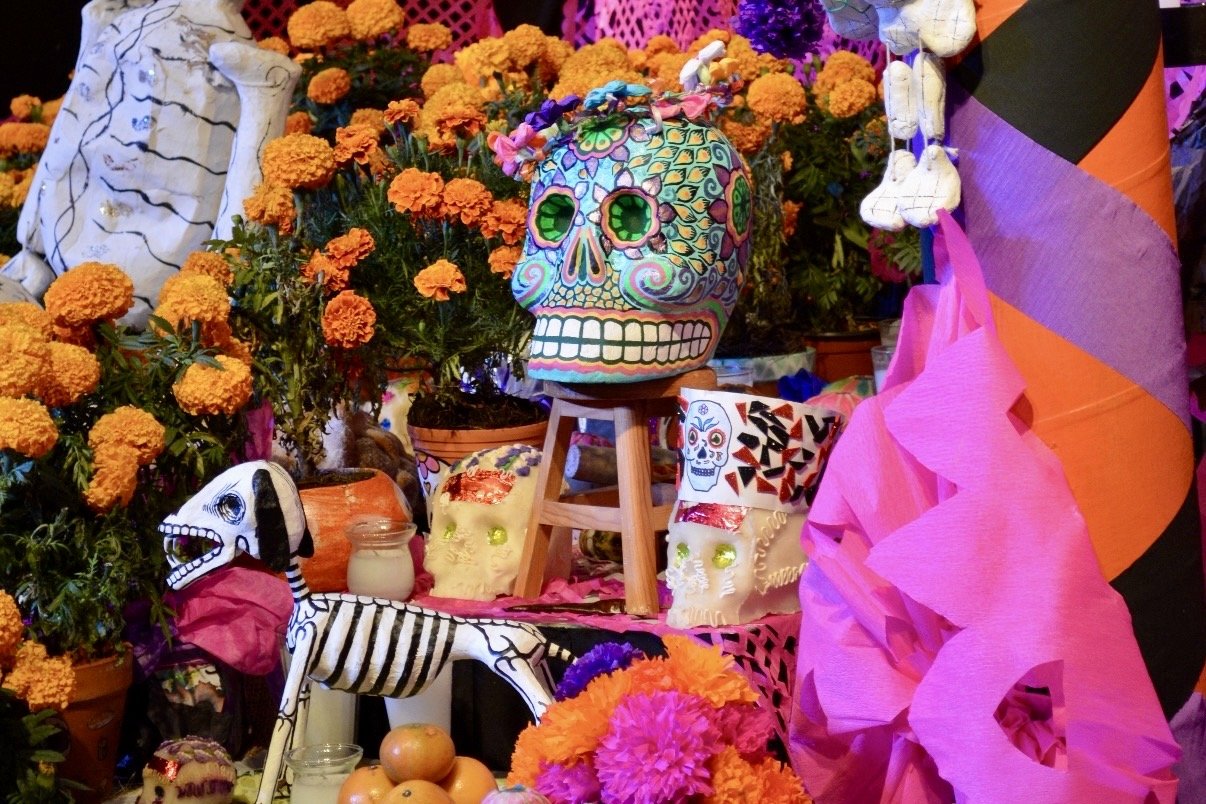
What Día de los Muertos Teaches Us About Remembering
Autumn has always been a crowded season for me.
My birthday. My wedding anniversary. And woven in between them, the dates I'd rather skip past but never quite can. The clocks go back, the nights draw in, and the people I've lost feel closer somehow. Not further away.
For a long time I thought that was something to manage. Something to get through quietly, head down, until the calendar moved on.
Then I started learning about Día de los Muertos. And it made me wonder what grief might look like if, instead of bracing ourselves for these dates, we set the table and invited our people in.
What Día de los Muertos actually is
Día de los Muertos, the Day of the Dead, is celebrated on 1 and 2 November (although there are some extended celebrations too), most famously in Mexico. It isn't "Mexican Halloween", and it isn't spooky. It's a homecoming.
The belief is that, for a short time, the spirits of loved ones return to visit the living. So families get ready for them.
They build ofrendas, home altars filled with photos, candles, and the person's favourite food and drink. They scatter bright orange marigolds, whose colour and scent are said to guide their people home. They clean and decorate graves, and some spend the whole night in the cemetery together, eating, sharing stories, playing music.
It blends Indigenous traditions that go back thousands of years with the Catholic days of All Saints and All Souls. It belongs to the families and communities who keep it alive, and I'm writing about it as someone learning from it, not claiming it.
What it taught me about grief
Here in the UK, we're not great at this.
We whisper names. We change the subject. We wait for someone else to mention them first, and often nobody does. Our people slowly get moved out of reach, tucked into a drawer with the sympathy cards.
Día de los Muertos does the opposite. It says:
They're still part of the family. Their photo goes in pride of place, not packed away.
Their favourite things still matter. The terrible chocolate they loved. The drink they always ordered. The song they murdered at every wedding.
Remembering can be colourful. Marigolds, music, food, laughter. Grief and joy at the same table, and neither has to leave.
You don't have to do it alone. Whole communities remember together. Nobody is left holding their loss in a quiet room.
That last one gets me every time. Because so much of the weight of grief isn't the loss itself. It's feeling like you have to carry it on your own, out of sight, so you don't make anyone uncomfortable.
And your body feels that. Holding it in, holding it together, holding your breath every time their name almost comes up. Letting them be seen can be a huge release.
Borrowing the spirit, gently
You don't need sugar skulls or face paint to take something from this. In fact, it's kinder not to. What we can borrow is the heart of it: the idea that our people deserve to be welcomed, not avoided.
A few ideas, if any feel right:
Make a little space for them. A shelf, a windowsill, a corner of the kitchen. A photo, a candle, something that was theirs. It doesn't have to be an altar. It just has to be theirs.
Cook or buy their favourite thing. Eat it, share it, or simply put it out for them. Notice what comes up as you do.
Say their name out loud. Tell a story about them at dinner. Ask someone else for one of theirs. You might be surprised how many people have been waiting for permission.
Bring colour in. Flowers in their favourite shade. The playlist they'd have danced to. Remembering doesn't have to be grey.
Gather your people. Even one friend, one cuppa, one evening of "do you remember when...".
Check in with your body. As you do any of this, pause. Where do you feel it? What's the texture, the temperature, the colour? Sit with it for a moment and ask what it needs.
And if none of this feels possible right now, that's OK too. Some years you're ready to set the table. Some years you just need to get through the week. Both are allowed.
A place at the table
The people we love don't stop being ours when they die. The relationship changes shape, but it doesn't end.
Día de los Muertos reminds me that remembering can be an act of love that's loud, bright and shared. Not something we do in secret, hoping no one notices our eyes filling up.
So this season, maybe light a candle. Put their photo where you can see it. Say their name.
Set a place at the table.
If this time of year feels heavy and you'd like some support finding your way through it, I'd love to hear from you.
Rachel 🧡